

Chim ú - Lambayeque style ceramic bottle from Peru

Chim ú - Lambayeque style ceramic bottle from Peru
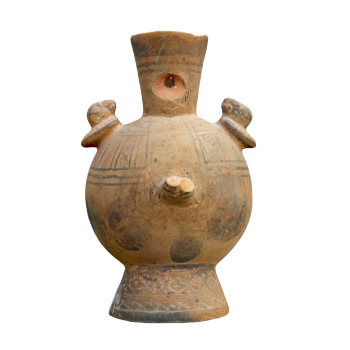
It is a cultural artwork originating from the northern coast of Peru, produced between approximately 1000 and 1470 AD. This ceramic bottle is renowned for its unique artistic style and exquisite craftsmanship, often adorned with rich patterns and symbolic images, reflecting the religious beliefs and daily life of the society at that time. In history, due to various historical reasons, some ceramic bottles have been lost overseas. It was once auctioned by W&H Peacock Auction Company in the UK, but fortunately, it was successfully recovered and returned to its original country in 2023. The return of cultural relics reflects the international community's emphasis and efforts on the protection of cultural heritage.
Peruvian Lambayeque style ceramic bottle

Peruvian Lambayeque style ceramic bottle

It is an artwork representing the pre Columbian culture of Peru. This type of ceramic bottle usually has exquisite technical and aesthetic features, as well as rich cultural symbolic significance. Known for its technical quality and aesthetic features, it reflects the development of the region's culture and the evolution of its style. It showcased the superb craftsmanship of the craftsmen at that time and conveyed profound cultural and religious messages through its designs and patterns. In the late middle period, techniques such as molding, application, and etching were used. Returned by Swiss authorities in 2023 and successfully recognized as a Peruvian national treasure. The return of ceramic bottles is not only a respect for cultural heritage, but also a recognition of historical continuity.
Valdivian style pottery jar

Valdivian style pottery jar

A modern ceramic container that imitates the pottery style of the Valdivian culture period in Colombia, South America. It existed approximately between 3500 BC and 1800 BC and is known for its unique pottery making techniques, typically featuring intricate hand carvings and complex patterns. Not only does it have significant value in archaeological and anthropological research, but it is also appreciated in contemporary times for its unique aesthetic and cultural significance. Design often reflects the artistic aesthetics and social life of ancient Valdivians. The modern production of Valdivian style pottery jars is not only a continuation of ancient craftsmanship, but also a tribute to this cultural heritage.
Female idol sculptures in the Cyclades Islands

Female idol sculptures in the Cyclades Islands

The female idols of the Cyclades Islands, also known as "Cycladic idols," are a series of marble sculptures made on the Cyclades Islands in the Aegean Sea during the early Bronze Age from 3000 BC to 2000 BC. Known for its simple geometric shapes and highly abstract style, it is typically depicted as a standing female figure with feet together, arms crossed in front of the chest, an oval shaped head, simplified facial details, and usually only the nose protruding. Collected in museums around the world, including the Louvre in Paris, they are an important part of ancient art and cultural heritage, as well as important physical evidence for studying ancient Aegean civilization.
Little Royal Sphinx

Little Royal Sphinx

It is a 3D model replica collected in the Louvre Museum in Paris, France. Originally made of plaster material, it was jointly completed by the National Museum Art Studio and Rmn-P (Louvre and Osay Museum Picture Agency). This small sphinx is 13 centimeters high, 18 centimeters wide, and 5.3 centimeters deep. It is one of the representatives of ancient Egyptian art, showcasing the pursuit of mystery and symbols of power in ancient Egyptian civilization. The replica has not only been adjusted in size for easier exhibition and research, but also strives to be faithful to the original in details, allowing the public to experience the charm of ancient Egyptian art up close.
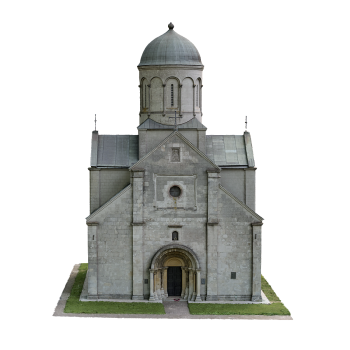
Holy Savior Church

Holy Savior Church

It is a religious building with a long history, founded in 1858 and completed in 1872. It was dedicated the following year. Its design inspiration comes from the Ani Cathedral, but on a larger scale. The church survived the 1926 earthquake due to its sturdy structure. A devastating earthquake in 1988 caused severe damage to the Church of the Holy Savior, but since 2002, the church has undergone a comprehensive renovation process. It is not only a symbol of faith, but also a witness to historical changes, reflecting the impact of social and political turmoil on cultural heritage. Now it is once again shining with its glory as a religious and cultural landmark.
Wooden Church in Salej County, Romania

Wooden Church in Salej County, Romania

Located in Salige County, Romania. This church is one of the outstanding representatives of traditional wooden architecture in Romania, reflecting the rich cultural heritage and wooden craftsmanship of the local area. It is very common in Romania, especially in the Maramures region, not only as a place of religious belief, but also as an important part of the local community's cultural and spiritual life. Using traditional construction techniques, instead of nails, wood is tightly bonded together through exquisite woodworking skills. Not only is it a landmark building in the region, but it is also an important tourist destination that attracts visitors and has significant value for studying Romania's history, religion, and ethnic art
Painted houses in the Podolia region of Poland

Painted houses in the Podolia region of Poland

A unique small village located in the Podolia region of southern Poland, known for its traditional painted houses. Residents decorate their homes with exquisite floral patterns and folk art style paintings, making the entire village like an outdoor art gallery. This decorative tradition originated in the 19th century, initially to cover up the smoke marks caused by cooking smoke, and gradually evolved into a cultural custom. Not only does it beautify the family, but it also carries the creativity of local residents and respect for tradition. With its unique style and vivid colors, it has attracted tourists and artists from all over the world to visit and learn.
Ch â teau de Charente Raboli, France

Ch â teau de Charente Raboli, France

A historic castle located in the Charente department of France. The specific construction year is unknown, but its history can be traced back to the Middle Ages and it is an important component of the region's historical and cultural heritage. Known for its magnificent architectural style and rich historical stories. The design incorporates multiple elements and reflects the architectural features of different periods. It was once the residence of nobles and witnessed many historical events, including wars, political changes, and social activities. Nowadays, the castle is open to the public and has become a popular tourist attraction. Appreciate the beauty of its architecture and art, while also learning about the historical stories related to it.
San Lorenzo Gate, Laredo, Spain

San Lorenzo Gate, Laredo, Spain

An ancient city gate located in Laredo, Cantabria Autonomous Community, Spain. As an important historical site in the city of Laredo, the San Lorenzo Gate witnesses the rich historical and cultural heritage of the region. Laredo city is located near the Atlantic Ocean and has a beautiful coastline, making it a scenic tourist destination. The San Lorenzo Gate is not only a part of the city's defense system, but also a legacy of medieval urban structures, providing visitors with a window to glimpse past history and architectural art.
Lycolette Monastery, Belgium

Lycolette Monastery, Belgium

Nivelle, located in the Walloon region of Belgium. This monastery has rich historical and cultural heritage value and is an important landmark in the city of Nivelle. Built in the mid-13th century, it was created by the Franciscan monk Leclert. The monastery is adjacent to the Church of St. John and Nicholas in Neverle, which is sometimes also known as the Leclert Church. The courtyard is not only a religious building, but also a center for community life and education, which is of great significance to local residents. The protection and reuse of monasteries have always been a focus of attention for local governments and cultural conservation organizations, aiming to preserve and highlight their historical and architectural value.
Architecture in Dimitrovgrad del Manovo, Serbia

Architecture in Dimitrovgrad del Manovo, Serbia

A cultural heritage site located in the city of Dimitrovgrad, Serbia. The 3D model of the building was created by architect Aleksandar Nik š i ć for the purpose of cultural heritage conservation research. This study was conducted by the Nis Cultural Heritage Protection Institute, led by architect Ivana Cvetkovi ć and historian Đ or Đ eSTO š i ć. It is not only a landmark building in the city of Dimitrovgrad, but also a symbol of the region's history and culture. It has witnessed the development and changes of the local society, and has important historical and artistic value.
The Khotke Family Tomb in Czech Republic

The Khotke Family Tomb in Czech Republic

The Holtek family tomb located in Valtilov, Czech Republic, is a monument of historical and architectural value. It is an important representative of Gothic architectural style, known for its complex design and cultural heritage value. This tomb is a permanent commemoration of influential members of the local aristocratic Holtke family in the 19th century, showcasing the exquisite craftsmanship of the craftsmen at that time. Highlighting its Neo Gothic decorative details. Not only is it a historically significant location, but it is also a marvel of architecture, reflecting the evolution of artistic sensibility during the construction period. It is part of the rich cultural tapestry of Czech Republic.
The Tower of Kings in Oropesa, Spain

The Tower of Kings in Oropesa, Spain

A historical building located in Oropesa, Castell ó n Province, Spain, also known as the "Tower of Kings". Built in the 15th century, it is a stone tower approximately 30 meters high. Located by the beach, it has a strategic location and is used as an important facility for coastal defense and surveillance. The tower has a sturdy exterior and a medieval architectural style. Named after a king in the history of Oropeza, believed to be King Alfonso V. According to legend, he once stationed here to protect the region from the threat of pirates and invaders. It showcases the importance of medieval Spanish architectural style and coastal defense, as well as its rich historical and cultural heritage.
Yokosuka Naval Port Guard Pavilion, Japan
Yokosuka Naval Port Guard Pavilion, Japan

Located at the Naval Port in Yokosuka City, Japan, it is a historic building in the area. A part of the Yokosuka Naval Arsenal, the Guard Pavilion was built around 1930 and serves as an important base for the Japan Maritime Self Defense Force. They mark the location of the entrance to the naval station and naval factory waters. The design features modern architectural characteristics, with a copper dome roof with a small dome and sunshade, resembling a baseball cap in shape. Not only is it a symbol of the history of Yokosuka Naval Port, but it is also a part of the cultural heritage of the region. You can learn about the history and culture of Yokosuka as a naval port here.
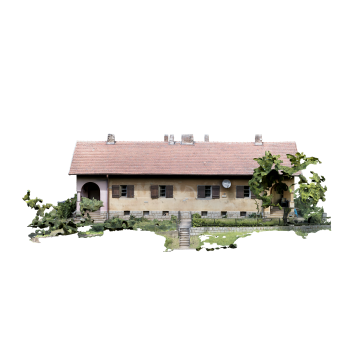
Serbia Belobrod Double Apartment

Serbia Belobrod Double Apartment

A house located in Belobrod, Serbia, with two independent apartments designed for engineers to live in. Beloborode was historically a gathering place for engineers and intellectuals. Built in the early 20th century, Serbia experienced rapid industrialization and modernization, leading to an increased demand for engineers and other technical professionals. Residential design not only meets residential needs, but also promotes communication and cooperation among professionals within the community. It is a part of Belgrade's historical and cultural heritage, witnessing the city's development and social changes in the 20th century.
Catholic Church of Auxerre, France

Catholic Church of Auxerre, France

A Catholic church located in the town of Auxerre in the Nouvelle Aquitaine region of France. Built in the 13th century and renovated in the 15th century, it falls under the jurisdiction of the Archbishop of Limoges. Composed of a single nave dating back to the 12th century, with a painted paneled ceiling at the top, the church ends with a flat end. Not only is it the local religious center, but it is also a part of the rich religious architectural heritage of the region. Along with the Romanesque art of Uz è che, the circular church of Saint Bonnet la Rivi è re, and the painted lintel of Shaiac on the banks of the Charante River, it constitutes an important artistic and architectural attraction in the area.
St. Panteleimon Church in Ukraine

St. Panteleimon Church in Ukraine

It is a religious building with a long history, not only one of the oldest buildings in the region, but also an important cultural heritage of Ukraine. Built in the 12th century, it was founded by Prince Roman Mstislavich of Galicia Volyn in 1194 and is located in the northeast direction of the city. Despite experiencing multiple wars and turmoil, this church still stands tall and bears witness to the historical changes in the Ukrainian region. After the invasion of the Ottoman Empire in the 15th century, it was converted into a mosque and was not rebuilt until 2000. The design and architectural style reflect the characteristics of the medieval period and are valuable materials for studying religious architecture at that time.
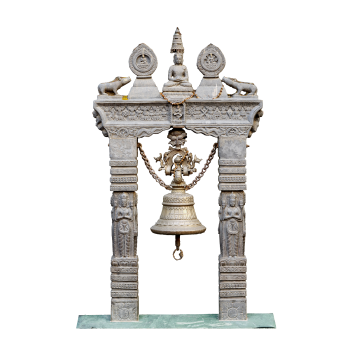
Nepal's traditional carved bronze bell

Nepal's traditional carved bronze bell

A part of Nepal's cultural heritage, this bell is not only used in religious ceremonies, but also often displayed as an artwork. It is usually made of copper and has exquisite patterns and symbols carved on the surface, which are often related to the religious beliefs of Buddhism or Hinduism. The shapes and sizes vary, but most have a top that can be shaken to produce a crisp and pleasant sound. In Nepal, bronze bells are not only used as ritual objects in religious ceremonies, but also an important embodiment of local handicraft skills and cultural traditions. Their existence not only enriches Nepal's cultural heritage, but also contributes to the world's handicraft arts.
Monastery in Northeast Slovakia

Monastery in Northeast Slovakia

A national cultural monument located in the northeast of Slovakia. This historic region is located near the Polish border and is renowned for its rich culture and history. Located on the banks of the Dunajca River, surrounded by Pieniny National Park, it provides a unique environment that combines historical and natural beauty. The monastery is a Gothic architecture with rich historical and cultural heritage, including rare herbal collections such as the "Flying Monk" herb from 1766. Tourists can experience the historical atmosphere of the monastery here, explore its internal exhibitions, and enjoy the magnificent natural scenery around.
Our Lady of Padar Church in the Philippines

Our Lady of Padar Church in the Philippines

It is an important component of Philippine cultural heritage. It is one of the symbols of the Catholic faith spread in the Philippines during the Spanish colonial period and is revered as the patron saint of multiple dioceses and municipalities. Associated with the Pilar Fortress in Zamboanga City, Samar Province. This fortress was declared a national cultural treasure by Presidential Decree No. 260 in 1973 and is also recognized as a cultural heritage site. The Church of Our Lady of Padar is also considered a heritage building, and the National Historical Commission of the Philippines installed a Grade II historic landmark on December 2, 2010. Not only does it showcase history and culture, but it is also an important component of people's beliefs and spiritual life.
Bonifacio Castle, South Koscijia Island

Bonifacio Castle, South Koscijia Island

South Koscijia Island boasts some impressive castles that bear witness to the rich history and cultural heritage of the region. The most famous of these is the Bonifacio Castle, located in the southernmost town of Bonifacio on the island of Corsica. It is a historic fortress built in the 15th century and ordered to be built by the vassal of the Aragon king, Vincent de Sitria. Known for its three-layer defense system, it is a very unique site in Europe. Located in a strategic location overlooking the Mediterranean, its sturdy walls and towers still stand today, making it an excellent place to explore the history and culture of Corsica.
Ancient Well on Tresco Island, UK

Ancient Well on Tresco Island, UK

A historic attraction on Tresco Island in the Isles of Scilly, UK. This ancient well is named after the guardian saint of the island, Saint Clair, who is said to have magical healing abilities and has become a pilgrimage site. Well water is believed to have the ability to cure skin diseases and other illnesses, attracting numerous tourists and pilgrims seeking health and well-being. This holy site is not only a focal point of religious belief, but also a part of the unique cultural heritage of the Sili Islands. The surrounding environment is peaceful and tranquil, often decorated with flowers and prayer cards, creating a sacred and solemn atmosphere. It witnesses the history of the island and is also a part of the spiritual life of the local residents.
Wall gates around the Hue Royal City in Vietnam

Wall gates around the Hue Royal City in Vietnam

A historical building located in Hue, Vietnam, which is related to the royal ceremonies of the Nguyen Dynasty. This building was built in the 1830s and is part of the numerous gateways and wall systems surrounding the Shunhua Imperial City. Designed in the traditional Vietnamese architectural style, with exquisite details and gorgeous decorations. Not only is it an architectural structure, but it also has important historical and cultural significance, reflecting the prosperity and power of the Nguyen Dynasty at that time. It is a symbol of Hue's cultural heritage and history, attracting numerous tourists and researchers to visit and study.